.png)


Why a Bilingual Daycare Boosts Your Child's Brain and Future
Updated: Dec 4, 2025
Discover why early bilingual learning sharpens focus, logic, and memory—and turns daycare into a real investment in your child's futureAs a parent, choosing how your child learns is one of the most meaningful decisions you’ll make. In a city like New York—diverse, vibrant, and multilingual—it’s natural to wonder how to best prepare them for the world ahead.
Neuroscience shows that children who grow up learning two languages from an early age develop stronger, more flexible, and better-connected brains [1].
That’s why at B&J Wonderland, bilingualism isn’t a bonus—it’s a structured, evidence-based methodology designed to nurture cognitive, emotional, and cultural development from the very first months of life.
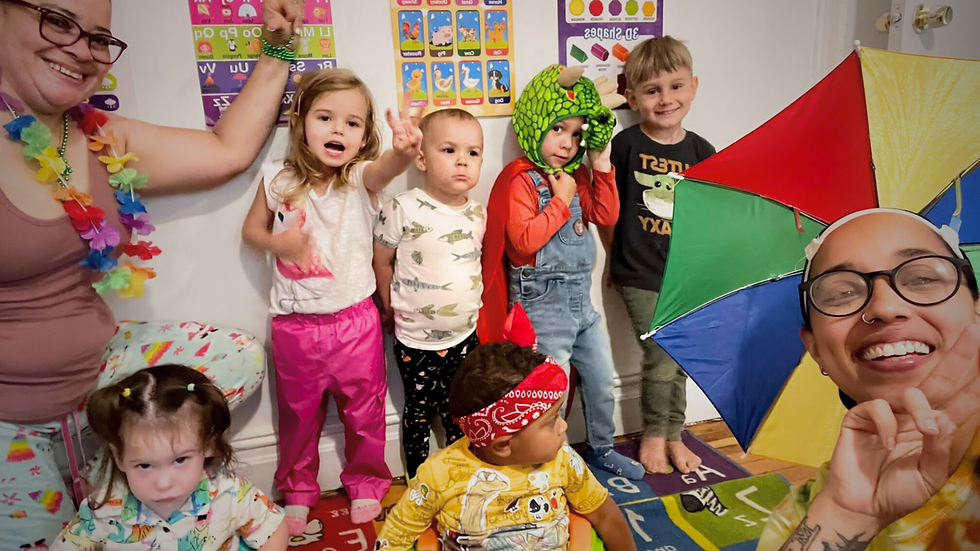
The Power of Bilingualism in Early Childhood
In New York State, 45% of children ages 0 to 5 live in households where a language other than English is spoken [2]. This is more than a statistic—it’s a call for responsive, inclusive education.
Far from being a challenge, early bilingualism brings measurable advantages. Children exposed to two languages from infancy show enhanced brain connectivity, stronger attention, and greater problem-solving abilities [1].
These skills are essential for thriving in any learning environment—in the classroom, within the family, and in a fast-changing world.Cognitive Benefits of a Bilingual Brain
Learning two languages changes how a child thinks. According to Harvard’s Center on the Developing Child, bilingualism strengthens focus, self-control, mental agility, and planning skills [5].
Switching between languages trains the brain to organize, prioritize, and adapt constantly. This enhances executive function and decision-making, even in toddlers.
In short, bilingualism is more than a language skill—it’s a brain-building advantage.
Emotional Growth, Identity, and Cultural Awareness
The benefits go beyond the brain. According to the National Association for the Education of Young Children (NAEYC), when schools affirm a child's home language, it builds emotional safety and trust [3].
Hearing and using their first language in the classroom tells children: "You belong here." That message is powerful for self-esteem, confidence, and love of learning.
Bilingualism also nurtures empathy and cultural openness. Kids who grow up switching between languages tend to be better at understanding others, navigating different perspectives, and feeling at ease in diverse environments [4].
Common Myths—And What Science Says
You may have heard some myths about bilingual programs. These concerns are common, but research tells a different story:
Myth 1: "Learning two languages delays speech."
This is a common worry, but it's not backed by science. According to Head Start, bilingual and monolingual children develop language at the same pace [6].
In fact, bilingual kids often develop stronger language awareness, which later supports reading, writing, and even learning a third language [1].
Myth 2: "Bilingualism confuses young children."
Mixing languages or switching between them isn't confusion—it's brain exercise. Harvard researchers explain that bilingual kids make constant mental decisions: which language to use, which to suppress, how to organize what they say [5]. This strengthens mental control, flexibility, and focus.
B&J Wonderland in Action: Bilingual Learning, Every Day
At B&J Wonderland, bilingual learning isn’t a separate class—it’s how each day unfolds.

Our teaching approach is rooted in translanguaging, a modern strategy that allows children to use both English and Spanish fluidly in stories, play, and conversation. Teachers celebrate these natural language shifts as learning opportunities.
Everything is taught through play. Songs, role-playing, sensory exploration—every activity supports language development in a joyful, pressure-free way.
And connection with families is key. All communication is bilingual and ongoing. From real-time updates via app to inclusive family events, home and school stay closely linked.
This holistic model—built on play, structure, and trust—lets bilingualism thrive naturally from the start.
What Can You Do at Home? Tips to Support Bilingual Learning (Even If You Speak Only One Language)
Bilingual learning doesn’t stop at the classroom door. With small, loving actions, you can support it at home:
Play with language: Use words you and your child already know in both languages during everyday play.
Read bilingual books together: Even if you don’t understand every word, let the pictures and patterns guide your conversation.
Sing in both languages: Music is a powerful memory tool. Repetition and rhythm help build vocabulary naturally.
Try a word-a-day: Learn one new word together and use it during meals or routines.
Use what the daycare provides: At B&J Wonderland, families receive bilingual notes, vocabulary, and photos to keep the learning going at home.
Mixing is okay: Using both languages in the same sentence is a natural part of bilingual development.
You don’t need to be fluent to support bilingualism. Just be present, curious, and open to learning together.
Conclusion: A Lifelong Advantage
Early bilingualism isn’t just academic. It shapes how your child thinks, feels, connects, and adapts.
At B&J Wonderland, learning in two languages is part of an education that blends structure, play, and family partnership. It’s a meaningful, research-backed investment in your child’s future.
Want to see how bilingual learning happens in real life? [Schedule your tour at B&J Wonderland today.
References:
[1] CogniFit (2023). Early bilingualism strengthens brain connectivity and cognitive flexibility.
[2] Migration Policy Institute (2025). Dual Language Learners in New York: Fact Sheet.
[3] National Association for the Education of Young Children (NAEYC). Supporting Dual Language Learners.
[4] Zero to Three. Dual Language Development: Double the Benefit.
[5] Harvard Center on the Developing Child. Executive Function & Self-Regulation.
[6] Head Start. The Benefits of Being Bilingual in Early Childhood Education.


Comments